Zen Habits has moved! Redirecting…

You should be automatically redirected. If not, visit http://zenhabits.net and update your bookmarks.

zen habits

Wednesday, January 31, 2007

Launchy and AutoHotKey - two great timesavers


Lifehacker just posted about the release of Launchy 1.0, a launching application that now does a whole lot more. I've used Launchy in the past, and it's a great program. With the quick searches, the ability to navigate through Explorer, and the ability to extend through plug-ins, this could be the app I've been looking for.

I've also been using AutoHotKey extensively lately ... while not exactly a launcher, this little app can do so much. I've programmed keys to launch my most commonly used apps, like Firefox or Money or AbiWord, as well as my most frequently used websites, like Gmail, Tracks, Google Reader, Gcal, my bank, this blog and more.

But there's much more to AHK: you can program any key combination to do anything: I have key combinations to quickly type my most commonly used signatures (multiple sigs for work and personal), to type my most commonly used phrases, to launch my most common folders, and more. The more you use it, the more useful it becomes.

And ultimately, the more time it saves. Which leaves me time to do other things, like working on my goals.

Habit 4: My Morning Routine


Today I start the fourth of my 12 Habits: my morning routine (to be honest, I started a couple days ago). All this month I will focus on making my morning routine a daily habit.

I've actually tried different versions of a morning routine in the past year, and have enjoyed them immensely. I just haven't stuck with one for a whole month or more, and that is the goal this month.

The reason I like having a morning routine is that not only does it instill a sense of purpose, peace and ritual to my day, but it ensures that I'm getting certain things done every morning ... namely, my goals. I'm setting aside morning time as a time of peace and quiet, and time to take small steps each day towards my goals.

Here's my morning routine, at the moment (subject to tweaking later):

Morning Routine

  1. Wake at 4:30 a.m.
  2. Drink water.
  3. Set 3 Most Important Things (MITs) for today.
  4. Fix lunches for kids and myself.
  5. Eat breakfast, read.
  6. Exercise (run, bike, swim, strength, or yardwork) or meditate.
  7. Shower.
  8. Wake wife & kids at 6:30 a.m.
A couple of explanations: The MITs that I set for the day concern at least one item towards one of my goals, and probably the 1-2 things I MUST complete at work. There will be more that I do during the day, but my focus will be to finish at least these three MITs.

As for the exercise and meditate item, I have a schedule where I do one exercise each morning (with the exception of Fridays, where I plan to meditate for at least 10-15 minutes). Actually, I also often exercise in the evenings too, so on some days I'll have two workouts - maybe a bike in the morning and swim in the evening, for example. My body is still getting used to this, so we'll see how it works out.

As for waking up at 4:30 a.m., I only started doing that within the last few months -- before that it was 5:00 or 5:30, and before last year I woke at 6:30, so I've really become an early riser just in the last year. I wrote more about that here.

Look for updates to my goal of sticking to my Morning Routine this month.

See also:

Tuesday, January 30, 2007

Baby Makes Eight: Raising Six Kids - Part 2, organization edition


See Part 1 for the introduction to this series.

In Part 1 about raising six kids, I talked about finances. That's only part of the battle. A lot of what makes raising so many kids difficult is the sheer logistics of it all. From soccer to choir to parent-teacher conferences to birthday parties ... heck, just getting them ready in the morning is an exercise in logistical planning and execution.

My solution? Well, I don't have simple answers, but I can share what has helped keep me and my wife sane.

Organizing and Scheduling Six Kids

  • The One Calendar that Unites them All. My wife and I used to have separate calendars, along with multiple school calendars, sports schedules, notices for school, and more. The side of our fridge was covered with these schedules, and it was a challenge to remember everything. Enter: Google Calendar. Now, we enter everything in one calendar. We do have separate sub-calendars for my work, my personal stuff, my wife's stuff, the kids, and my training, but it's all viewable on one calendar. Now, whenever we get a school calendar or sports schedule or notice for something at school, we quickly enter it into Gcal. Same thing with work appointments, meetings, classes, 5Ks and more. Now we can just look at the calendar, from work or home, and see what's going on that day, or the next day.
  • Teach them to be self-sufficient. Sure, it's easier and faster to shower them and dress them yourself than to watch them do the same tasks much more slowly and incompetently. But try that with six kids. You'll go crazy. The answer is to teach them to do things themselves. It takes a little more time at first, but within a month, it will more than pay off. Now, our kids can not only shower and dress themselves (and pick out their own clothes) but feed themselves breakfast, clean their rooms, brush their teeth, comb their hair, get their stuff ready, wash their own dishes (well, not the youngest two, but the oldest four). The only thing I do in the morning is fix their lunches, and my wife irons their clothes. My oldest daughter, 13, can iron clothes too, and she has learned to help out with the babies and chores. They can all do chores too, like sweeping and mopping.
  • Plan sufficient lead time. We used to think an hour to get ready was enough. And after our two new babies were born, we became late for everything. Now, we give ourselves more than two hours. While we could probably get ready in an hour, now our preparation time is much more relaxed. And we're more on time than before. Usually.
  • Make a weekly dinner menu. Yeah, this isn't a new tip, but it's very useful. We plan out the dinners for the week -- and the kids can make suggestions -- and go shopping with that menu in hand, and the ingredients listed out. It also makes things easier come dinner time -- no decisions to make ... just whip out the ingredients and cook it up.
  • Plan easy dinners. Anything that takes a lot of time to prepare is too much trouble. Spaghetti, chili, tacos, baked chicken (the healthy version of each) are some of our staples.
  • Pack your gear by the door. Having a checklist for soccer gear, or other similar events, is a good idea. And when you're preparing for the upcoming day, start assembling all your stuff by the door, making sure you have everything, so that nothing is forgotten. Forgetting someone's cleats and having to turn the car around to get them is a pain.
  • Pack a bag with extra clothes. We keep a small carry-on luggage packed with a couple of changes of clothes and underwear for each child stowed away in the car. If there's an accident, or some of the kids want to spend the night with grandparents, that bag will be very handy.
  • Have a family meeting. I'll post more about this later in the series, but it's a good idea to have the whole family sit down once a week and talk about any issues that family members have. This communication is key to having a happy family.
  • Everyone should eat together. We can't do this every day, but we try to sit down together and have dinner as a family. It's a good time to talk about each person's day.
  • Have an inbox, and clear it often. All papers, bills, letters, flyers, schedules, school papers and more go straight into our single inbox. The inbox should be cleared every day or every other day -- just plow through it, one item at a time, making a decision, taking action, filing or trashing each item right away. Don't put it off or stuff will pile up!
  • Teach the kids that everything has a place. Each thing in your home should have a "home". Teach the kids where that home is, and get them in the habit of putting it in its home. They'll never get perfect at it, but the more that everybody does this, the fewer things get lost. Also, clean as you go to keep the house fairly clean at all times.
  • Declutter often. Get rid of the junk in your closets, that clutter up the house, that clutters the garage. Have regular decluttering days. Teach them to give away toys and clothes to charity. It's also a good idea to clear out old toys every time they get new ones on birthdays and especially Christmas.
Other parts of this series:

Fatherhood - a couple good blogs

Fatherhood is a topic not covered often enough by the parenting magazines, but there are some good blogs out there. Check out Fatherhood and Daddy Daze, two sites I just discovered. Some nice articles there.

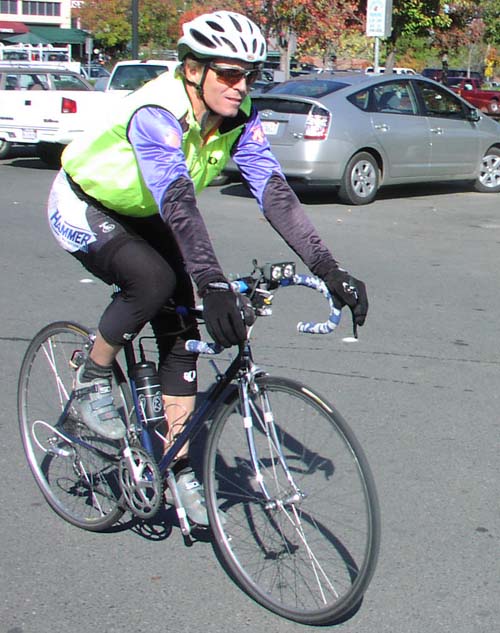
6 Tips for Commuting to Work by Bike


This morning, I rode my bike in to work (a distance of about 10 miles), and it felt great. It was the second time I've done that now -- I also did it last week -- and I hope to make it a more frequent thing.

My goal is to get some exercise (I'm training for a triathlon) while also helping the environment and saving money on gas. With the gas prices rising so much in the last few years, it's frustrating to not be able to do anything about it -- but now I am.

Although it's a bit scary riding a bike in the middle of traffic, I have to say it was a great experience. Not only did I feel really good to get the exercise, but I had a great view of nature as I headed to work, and it was a lot more peaceful and relaxing than the regular commute by car. I hope to eventually build up my stamina so that I can ride my bike to and from work at least three or four times a week, or even five days a week, but for now I'm starting out slowly, as I'm new to cycling.

Tips for Commuting by Bike

  • Plan ahead. One of the reasons people don't commute by bike, even if they have a bike, is that they don't want to be sweaty. I'm lucky, as my work just installed a new shower, but before that I planned to use the shower of an office next door, or use the shower at a nearby gym (even becoming a member at a gym is cheaper than gas). You'll also need soap and deodorant and a towel and other toiletries. Then there's the issue of how to get your clothes to work, which is my next tip.
  • Drop your clothes to work ahead of time. You could pack them in a backpack, to wear on your back, but it gets your back sweaty. You could also put it in a pannier and carry it on a rack, which is a good option, but you might not want your clothes wrinkly for some reason. The solution I've been using (and it's not an original idea) is to bring my clothes to work the day before. This also saves some extra pounds that I have to carry on my bike, which is an issue for a beginner like me. You could even bring in clothes for the rest of the week. Eventually, if I ride to work five days a week, I might have to drop a week's worth of clothes sometime in the weekend.
  • Any ol' bike will do. You don't need a fancy racing bike or touring bike or anything to commute. If you've got an old mountain bike, which I do, that's good enough. You don't need to spend a lot of money on a bike and gear to get started. Later, you can always spend more, a little at a time, but whatever you've got is good enough for now.
  • Have a spare tube and tools, and know how to change a tire. You never know if you'll get a flat, and you don't want to be stuck walking your bike for several miles. A patch kit is good, but it's even easier if you just have a spare tube, a pump, and the right tools so that you can quickly change the punctured tube for a new one, and patch the old one later at home.
  • Be safe. This is a no brainer, but it is good to read up on tips on cycling safety (see links below) before heading out into dangerous traffic.
  • It's a blast! Cycling is a lot of fun, as I've discovered in recent weeks, and riding to work is much, much better than driving. Try it. You'll love it.
As always, I've pulled a few links on commuting bike for y'all:

Monday, January 29, 2007

Get Healthy and Fit, Part 2 - Exercise Edition


In Part 1 of this series about Getting Healthy and Fit, I covered some Rules for Eating Healthy. Today, I will cover some Rules for Exercising, and tomorrow I plan to write about Sticking to an Exercise Plan.

First let me say: eating healthy is a great foundation for getting fit and healthy, but exercise is what will really get you there. Actually, you can do one and not the other, but you'll only be halfway there, really. You need both.

Rules for Exercising
I have been exercising fairly steadily for more than a year now -- starting in December 2005, I began a pretty ambitious running program. In fact, about a month after I started running, I got a big head and decided I would attempt to train for and complete a marathon. After some struggles during the year, I completed the marathon in December 2006. This year, I am training for a triathlon, learning to bike and swim in addition to continuing my running.

So I've learned a lot about exercising in the last year. Not only am I learning by doing, but I've learned a lot from others, books that I've bought, and websites that I've been continually researching.

What follows are some of the tips I have for those who want to begin and maintain a healthy exercise program.

Exercise Rule #1: Start today, and just do anything to get you going. It doesn't matter what exercise you choose, just start. I think walking and running are great ways to start, because you don't have to pay to join a gym or get fancy equipment. All you need is a pair of shoes. I started with an old beat-up pair of sneakers, and didn't buy real running shoes until I'd been doing it a few weeks. Swimming and biking are two great exercises too, though.

Exercise Rule #2: Stop making excuses. I know from experience -- we all have a million excuses. Not enough time. No place to work out. I'm tired. I don't have the money. These are all a load of crap. I don't blame anyone for making these excuses, because I made them myself, but the truth is, we rationalize so that we can continue to be lazy. It isn't as hard as you think. Just set a date with yourself, or your spouse, or a friend, to get out for just 10 or 15 minutes today, and walk or jog. No! Stop making excuses!

Exercise Rule #3: Just put on your running shoes, and get out the door. That's all you have to do. The rest will be much easier than you think. It's the initial inertia that we must overcome. Once you've done that, it's actually invigorating and fun.

Exercise Rule #4: Start out small, and slowly. You might start a program full of vim and vigor, ready to run a marathon or lift huge weights. Hold yourself back. The main reason is that if you start slowly, you are more likely to succeed, and if you start by trying to do too much, you will more likely burn out and fail. If you think you can run for 30 minutes, only run 10 or 15 to start with, then slowly increase over a matter of weeks. Try for 2-3 times a week at first, with the goal of exercising for at least 30 minutes five times a week, eventually. The side benefit -- and this is a great one -- is that if you hold yourself back, you'll be eager to get to your next workout, when you'll be doing a little more than this one. And that eagerness is a tremendous boost.

Exercise Rule #5: Make your goal public. Post it on your blog. Tell your family and friends. Sign up for a site like Traineo.com, where your workouts and weight loss are emailed to several "motivators" that you choose. For my marathon and triathlon goals, I began writing a column every two weeks for my local newspaper, as a journal of my personal journey along the way. Positive public pressure will keep you motivated for a sustained period -- you won't want to let people down and look bad. Don't let the pressure up -- once you do, your motivation will go away.

Exercise Rule #6: Reward yourself. Make a list of mini goals, and next to each one, list an appropriate reward. For example, if you just go out and jog today, allow yourself to buy a book on Amazon. If you can do it for two days, give yourself an ice cream. If you can do it for a week, buy some songs for you iTunes. Whatever rewards work for you -- be they shoes, clothes, a massage, a tattoo, or whatever, let yourself have them after reaching the mini goals. Just don't make it too much sweets!

Exercise Rule #7: Allow yourself adequate rest. Some people try to run hard every day, or workout hard every day. Just remember, your muscles need rest in order to recover. If you don't let them recover, you are just continually breaking them down. Follow the hard-easy rule: after a day of hard exercise, go easy or rest the next day. Also, you need at least a day of rest each week. Your body can only take so much before it begins to break down. Don't let it get to that point. Many very wise people have said that rest is just as important as exercise when it comes to improving performance.

Exercise Rule #8: Think positive. This is probably the best rule of the bunch. It has helped me in countless ways. Any time that a negative thought comes into your head ("I can't do this!" "It's too hard!" "I don't feel like working out now!" "I want to stop!" "I feel lazy today!"), just push it out. Squash it. And then replace it with positive thoughts: I can do this! I am strong! This isn't too hard! If Leo can do it, so can I! This is no problem! I'm tough! I am AWESOME!!!!!! Positive thinking will get you past any exercise barrier.

Exercise Rule #9: Don't be motivated only by weight loss goals. If you're just trying to lose weight, you will more than likely stop. Why? I have no idea, but it's true. Have other motivators: do it to feel good, for the great energy you get, to lower your medical bills, to live longer, to enjoy life more, to look better, to be stronger, to be healthier, to achieve something worthwhile, to overcome a challenge. Make a list of the reasons you want to exercise and post them up somewhere. And yes, cut out a picture from a magazine that will motivate you and post that up too. Losing weight is a great goal, but don't let it be your only one.

Exercise Rule #10: If you fail, get up, brush yourself off, and start again. We all fail sometimes. No matter how great we are, we fail. I have missed workouts plenty of times in the last year, but the key is that I just get back on that horse again. I don't let it stop me from continuing. Look at it like I do: it's a long road ahead of us, and little problems along the way are mere bumps in the road. Don't let a bump in the road stop you from continuing your journey.

Exercise Rule #11: If you can, get a workout partner. It's a great motivator. If you know you have to meet someone to workout, you're more likely to keep that appointment. However, if your partner has to cancel for some reason, don't let that stop you from working out on your own.

Exercise Rule #11: Have fun! Exercise can and should be fun. Don't let it be painful. If it is, slow down a bit, and enjoy the scenery. Exercise in a nice place, with water or trees. Breathe deeply and enjoy the fresh air! Look at that sunrise or sunset! The day is glorious, and you are partaking of it fully. Life is great!

Kiplinger: Eight Keys to Financial Security


Knight Kiplinger, publisher of the financial magazine, wrote a good article on Eight Keys to Financial Security.


The eight keys:

  • Key 1: Invest in yourself. By constantly improving your education and job skills, you are improving your chances of getting increases in salary, which amount to the same thing as the gain from larger investments.
  • Key 2: Protect yourself and your loved ones. Before you invest, Kiplinger recommends insurance against serious illness, disability and early death, to protect your family against emergencies.
  • Key 3: Borrow sparingly.Use credit only to purchase things of lasting value: a home, education, maybe a car. Pay cash for everything else.
  • Key 4: Pay yourself first. This is very common advice, but very sound.
  • Key 5: Don't go for the home run. Shy away from volatile stocks. Stay in it for the long run.
  • Key 6: Diversify, diversify, diversify. Self explanatory.
  • Key 7: Live simply today for a more comfortable tomorrow. Deferred gratification is no fun, but can get you to long-term goals, like college for your kids, dream home, early retirement, travel and more.
  • Key 8: Give generously to create a better world. "When you share your good fortune by donating your money, time and talent to charity, you help create a stronger economy and a healthier, safer world."

Baby Makes Eight: Raising Six Kids - Part 1


Last March, my wife gave birth to a beautiful baby girl, Noelle Cayce. She became our sixth kid, and within the space of a few years, our house had suddenly become very full.

A little background is in order: my wife and I came together six years ago with two children each from previous relationships, and after we got married in 2003, we had a son (Seth Isaiah) in 2004, and now Noelle in 2006. We each went from having two kids to having six within three years.

Raising so many kids at once has, of course, been a financial challenge, as well as a scheduling and organizational challenge. It's also been an amazing blessing, and I'm planning to do a series of posts on what it's like to raise so many kids, and some of my best parenting tips. This is the first of the series, and it will deal with finances.

The Finances of Raising Six Kids
When my son was born in 2004, my wife and I made the decision that she should stay home to take care of him. When my daughter was born in 2006, we decided she should continue to stay home. It was an important decision, and we are both very glad we made it. She's the best caretaker by far for our two babies, and she's been able to breastfeed and do all kinds of other stuff that only a mom could do.

Of course, it's also harder for us financially, but it's worth the sacrifices, in my opinion. We've cut out a number of expenses to be able to live on my salary (see How I Save) and the decision has forced us to learn to live frugally. We actually struggled for awhile, but I believe we're hitting our stride now.

I've also been working as a free-lance writer on the side, to give us some extra income on top of my regular salary.

Here are the keys to being able to survive with six kids, with only one spouse working:

  • Live frugally. Living on one salary (plus free-lance pay) requires sacrifices. It means you can't eat out as much, or go to the movies as much. We have only one car. We cut out cable. It becomes a sort of lifestyle after awhile, but it's certainly difficult at first.
  • Increase your income. While you may only have one salary, there are many other ways to make money on the side, from working part-time to free-lancing to consulting to selling Avon to babysitting. Any extra income helps a lot.
  • Pay off debts, and avoid further debts. We had a little problem with debts accumulating, especially when we weren't making enough money to pay our bills. But we've reformed our ways, canceled our credit card, and are now slowly paying off our bills, one by one. Once we're done, we'll have a lot of extra money to save.
  • Build an emergency fund. It's tough, but it is CRUCIAL that you save money each payday, no matter how small the amount. If you can't figure out how to do this, cut out some smaller expenses, trim others, cancel cable or Netflix or your gym membership or something. Find a way to save. It's the most important part of your finances, especially the part where you build an emergency fund. You should build it up to at least $1,000, because at any moment, your car might break down or your kid might need to go to the hospital or any other kind of emergency could happen and leave you not only without the necessary funds, but figuring out which bills you can pay later so you can pay for the emergency. If you have savings, you can pay for these emergencies, without
  • Budget. I know it's a dreaded thing for many people, but it doesn't have to be hard. Simply list out your regular monthly expenses (utilities, rent, car, internet, cell phone, etc.) along with variable expenses (groceries, gas, eating out, etc) and other irregular expenses that might not come up every month but that you know you'll need sometime (car repairs, home maintenance, gifts, medical, etc., broken down as a monthly expense). List your income. Your income should be more than your expenses. If not, trim some expenses.
  • Automate your finances. For all my bills, I have them either automatically deducted (like my car payment and phone) or have a regular online check going out to them each month. The only things not paid online are the things I need cash for, like gas and groceries.
  • The Envelope System. For everything that you can't automate online, withdraw the cash each payday (instead of using ATMs and incurring fees) for those expenses and put them in separate envelopes. I have three: groceries, gas, and spending (everything from eating out to kids school stuff). When the money runs out in that envelope, you can't spend anymore until next payday. It's a simple way to keep track of how much you have left, instead of guesstimating and withdrawing too much or charging too much.
  • Find free ways to have fun with your kids. While we are making sacrifices, and our kids have to make sacrifices too, that doesn't mean we can't have a great time with them. We plan a Family Day every Sunday, when we all do stuff together that we love doing, like reading, watching movies (we usually rent DVDs to save money), playing sports, going to a park, playing board games, going to the beach, visiting family, or doing a lot of other free or cheap stuff. Fun doesn't have to cost a lot.
  • Plan ahead. If you know someone's birthday is coming up, plan for it, so you're not scrambling to find money to buy a gift. Same thing with school expenses, like field trip money or school photos. Our kids are also involved in sports, so we have to plan for uniforms and cleats and more. Think ahead to what you'll need, so you're not broke when that expense comes up.
  • Treat your family once in awhile. While lots of fun things are free, sometimes you gotta splurge. Take the kids out to a movie, or a restaurant. Our favorite splurge is going to a water park. Recently we ran into a few hundred extra dollars, and instead of being responsible and paying off more debt or saving it, we rented a room at a hotel with a great water park, and spent two days there having a blast with the kids. Other times we'll just treat them to ice cream cones or something.
Other parts of this series:

Pay Cash Instead of Borrowing or Using Credit


Trent over at the Simple Dollar has a great post about paying cash, and I agree completely.

His example of paying cash for a car is something I haven't done yet, but plan on doing. I'm going to sell my Pathfinder, buy a cheaper used van (because I need more space for all my kids), and pay off that loan before the end of this year. Once that's done, I'll pour the car payment money into savings so that I can save for my next car. It will feel amazing to do that!

Using credit cards, especially if you are not paying off your balance in full, is also not a good idea. I've canceled my cards, and am trying to pay off my remaining balance by this summer. The interest on these cards can kill you, and keep you in debt forever.

I'm generally against debt, as it has ruined my finances, and I am still on the road to getting debt free. It's one of my top goals for the next year and a half.

J.D. over at Get Rich Slowly also has some great posts about the issue of avoiding debt.

Sunday, January 28, 2007

Goal Update: January was great!


Earlier this month I posted about my goals for the year and how I will accomplish them. Part of that is a monthly review, which I'm doing now. I'm also setting my goals for February.

Check out how I did for January:

  • Triathlon: Did swim training two times a week (missed twice due to other circumstances); ran 2-3 times a week (didn't do long runs though), including a PR for a 5K! Started riding my bike (twice last week!) Did great!
  • Strength training: Did short strength workouts, but missed last week. Need to improve.
  • Yard work: Did a good job on keeping the yard in shape, but missed last week due to a soccer game and other circumstances. Good, could do better.
  • Payoff credit card, car: Continued to make payments in car and extra payments for credit card. Great!
  • Save: Continued to set aside money for an emergency fund. Great!
  • Apply law school: I've re-evaluated this goal and no longer plan to apply to law school this year. My life plans have changed.
  • Meditate: I only did this once, and skipped it for the last two weeks. Need to improve!
  • Positive Parenting: Was more positive this month, but didn't read and could do better with the yelling. Need to improve.
  • Simplify: I started to de-clutter, but missed the last two weeks. Need to improve.
  • Take Action (regarding global warming): I began implementing some energy-saving actions, and passed on An Inconvenient Truth to my mom, and rode my bike to work once. Great!
Overall, I dropped one goal, and did well in five of the other nine goals. This month, my focus will be to improve on strength training, meditating, positive parenting and simplifying, while keeping up the good work in the other goals.

I also plan to institute a new tracking system modeled after Ben Franklin's chart. Will post on this once I figure it out.