Zen Habits has moved! Redirecting…

You should be automatically redirected. If not, visit http://zenhabits.net and update your bookmarks.

zen habits

Monday, January 29, 2007

Pay Cash Instead of Borrowing or Using Credit


Trent over at the Simple Dollar has a great post about paying cash, and I agree completely.

His example of paying cash for a car is something I haven't done yet, but plan on doing. I'm going to sell my Pathfinder, buy a cheaper used van (because I need more space for all my kids), and pay off that loan before the end of this year. Once that's done, I'll pour the car payment money into savings so that I can save for my next car. It will feel amazing to do that!

Using credit cards, especially if you are not paying off your balance in full, is also not a good idea. I've canceled my cards, and am trying to pay off my remaining balance by this summer. The interest on these cards can kill you, and keep you in debt forever.

I'm generally against debt, as it has ruined my finances, and I am still on the road to getting debt free. It's one of my top goals for the next year and a half.

J.D. over at Get Rich Slowly also has some great posts about the issue of avoiding debt.

Sunday, January 28, 2007

Goal Update: January was great!


Earlier this month I posted about my goals for the year and how I will accomplish them. Part of that is a monthly review, which I'm doing now. I'm also setting my goals for February.

Check out how I did for January:

  • Triathlon: Did swim training two times a week (missed twice due to other circumstances); ran 2-3 times a week (didn't do long runs though), including a PR for a 5K! Started riding my bike (twice last week!) Did great!
  • Strength training: Did short strength workouts, but missed last week. Need to improve.
  • Yard work: Did a good job on keeping the yard in shape, but missed last week due to a soccer game and other circumstances. Good, could do better.
  • Payoff credit card, car: Continued to make payments in car and extra payments for credit card. Great!
  • Save: Continued to set aside money for an emergency fund. Great!
  • Apply law school: I've re-evaluated this goal and no longer plan to apply to law school this year. My life plans have changed.
  • Meditate: I only did this once, and skipped it for the last two weeks. Need to improve!
  • Positive Parenting: Was more positive this month, but didn't read and could do better with the yelling. Need to improve.
  • Simplify: I started to de-clutter, but missed the last two weeks. Need to improve.
  • Take Action (regarding global warming): I began implementing some energy-saving actions, and passed on An Inconvenient Truth to my mom, and rode my bike to work once. Great!
Overall, I dropped one goal, and did well in five of the other nine goals. This month, my focus will be to improve on strength training, meditating, positive parenting and simplifying, while keeping up the good work in the other goals.

I also plan to institute a new tracking system modeled after Ben Franklin's chart. Will post on this once I figure it out.

Zen Mind: How to Declutter


One of the things that gives me most peace is have a clean, simple home. When I wake up in the morning and walk out into a living room that has been decluttered, that has a minimalist look, and there isn't junk lying around, there is a calm and joy that enters my heart.

When, on the other hand, I walk out into a living room cluttered with toys and books and extra things all over the place, it is chaos and my mind is frenetic.

I've been a simplifier and a declutterer for years now (probably 8-9 years) and I've gotten pretty good at it, but I've found that you have to keep coming back to revisit your clutter every once in awhile.

Here are my top decluttering tips:

  • Do it in small chunks. Set aside just 15 minutes to declutter just one shelf, and when that shelf or that 15 minutes is up, celebrate your victory. Then tackle another shelf for 15 minutes the next day. Conquering an entire closet or room can be overwhelming, and you might put it off forever. If that's the case, just do it in baby steps.
  • Set aside a couple hours to do it. This may seem contradictory to the above tip ... and it is. It's simply a different strategy, and I say do whatever works for you. Sometimes, for me, it's good to set aside part of a morning, or an entire Saturday morning, to declutter a closet or room. I do it all at once, and when I'm done, it feels awesome.
  • Take everything out of a shelf or drawer at once. Whichever of the two above strategies you choose, you should focus on one drawer or shelf at a time, and empty it completely. Then clean that shelf or drawer. Then, take the pile and sort it (see next tip), and put back just what you want to keep. Then tackle the next shelf or drawer.
  • Sort through your pile, one item at a time, and make quick decisions. Have a trash bag and a give-away box handy. When you pull everything out of a shelf or drawer, sort through the pile one at a time. Pick up an item, and make a decision: trash, give away, or keep. Don't put it back in the pile. Do this with the entire pile, and soon, you'll be done. If you keep sorting through the pile, and re-sorting, it'll take forever. Put back only what you want to keep, and arrange it nicely.
  • Be merciless. You may be a pack rat, but the truth is, you won't ever use most of the junk you've accumulated. If you haven't used it in the last year, get rid of it. It's as simple as that. If you've only used it once or twice in the last year, but know you won't use it in the next year, get rid of it. Toss it if it's unsalvageable, and give it away if someone else might be able to use it.
  • Papers? Be merciless, unless it's important. Magazines, catalogues, junk mail, bills more than a year old, notes to yourself, notes from others, old work stuff ... toss it! The only exception is with tax-related stuff, which should be kept for seven years, and other important documents like warranties, birth and death and marriage certificates, insurance, wills, and other important documents like that. But you'll know those when you see 'em. Otherwise, toss!!!!
  • If you are on the fence with a lot of things, create a "maybe" box. If you can't bear to toss something because you might need it later, put it in the box, then close the box, label it, and put it in storage (garage, attic, closet), out of sight. Most likely, you'll never open that box again. If that's the case, pull it out after six months or a year, and toss it or give it away.
  • Create a system to stop clutter from accumulating. There's a reason you have tall stacks of papers all over the place, and big piles of toys and books and clothes. It's because you don't have a regular system to keep things in their place, and get rid of stuff you don't need. This is a topic for another day, but it's something to think about as you declutter. You'll never get to perfect, but if you think more intelligently about how your house got cluttered, perhaps you can find ways to stop it from happening again.
  • Celebrate when you're done! This is actually a general rule in life: always celebrate your accomplishments, no matter how small. Even if you just decluttered one drawer, that's great. Treat yourself to something delicious. Open that drawer (or closet, or whatever), and admire its simplicity. Breathe deeply and know that you have done a good thing. Bask in your peacefulness.
Other posts about decluttering elsewhere:
See also:

Parent Hacks: Getting Organized


One of my favorite sites for parenting tips (I have six kids, so I'm always on the lookout) is Parent Hacks, and one thing I love about the site is its Getting Organized series. But there are other great ones too.

Check out a few of my favorites:

Quit Caffeine Update: Goin' Cold Turkey This Week

For the last two weeks, I've been slowly cutting back on caffeine in my attempt to quit. This week, I'll have no caffeine at all. I love coffee, so this is a challenge for me.

I've read about the withdrawal pains that come when you quit caffeine, such as headaches and drowsiness. But I've got to say, the cutting-back-slowly method has been working great for me! No headaches today, no drowsiness, and not a DROP of caffeine -- no coffee, no chocolate, no caffeinated tea, no colas.

I hope the rest of the day, and the week, go as well. I still get some cravings for coffee, but for the most part, I'm fine. And the great part of it is, I am quitting another addiction. I might have a cup of coffee once in awhile later on, once I'm completely quit (give it at least a month), but that will be as an occasional treat, not a regular habit. And plus ... I'll save money and help the environment!

Previous:

Update:

Achieving Goals with my Son: Our Harry Potter Marathon


In December, my son Rain (who turned 9 in January) and I set out on a quest: to read the first five Harry Potter books before the movie comes out on July 13, 2007. That gave us about seven months to read five books, but if you've read those books, you know that they're pretty long (especially the last few).

It's also more of a challenge because my son only lives with me for three days a week. But as my daughter said, Rain and I are both very determined people, and we're proving to be up to the challenge.

So far we zipped through the first two books and are almost done with the third. That leaves us with two long books to read in five months, and I'm positive we can do that. We might even start on Book 6 before the movie comes out. On the days that Rain is with me, we read in the evenings, and then I wake him up early (usually at 5:30 a.m.) to read again in the mornings. And when he's not with me, I often call him up and read over the phone in the evenings, as he reads along with his own copy at his mom's house.

It's been a great experience, doing this Harry Potter marathon with Rain. We've read before, but never with this frequency, and we're spending more quality time alone than ever before. It's also great trying to achieve a goal with him, because not only does it give me a good feeling as we achieve our milestones along the way, but it gives him that great feeling too. So not only are we spending great time together, and having fun, but I am teaching him how to accomplish goals as well.

This has been so great that I want to do the same kind of thing with my other kids. I have six of them, so that makes it a bit of a challenge. I want to do something that is different for each of them, something that we can have fun doing while learning to achieve goals together.

Friday, January 26, 2007

I wish he didn't have to go


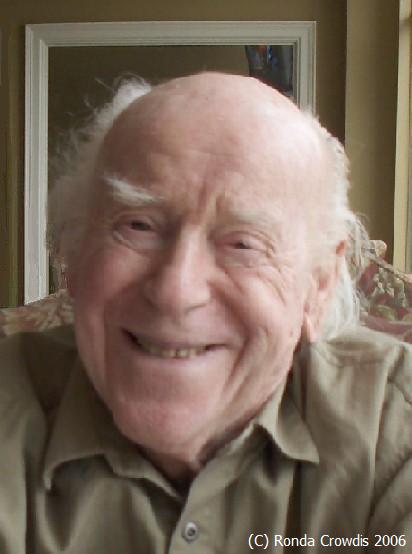
An amazing 93-year-old blogger wrote a post recently that touched me like no other blog post has ever done:

It bothers me that I have to go

Not only is this a moving post, but it makes you think about everything. Everything. And a post like that is pure gold.

A brief excerpt from Don's post:

I've floated on the remark "Been there, done that" for some time now, but the notion that the moment is approaching when I can no longer say this bothers me. The truth is, I don't want to go.
I highly recommend you check it out.

Thursday, January 25, 2007

Mind Like Water


As I just posted about my GTD implementation, I started thinking about what appeals to me most about GTD. Of course, there is its total organization and complete capture of everything in your life. There is the clean desk and inbox acheived by this system. I love all that.

But what really appeals to me is the idea of attaining a "Mind Like Water" state. I have to admit, I haven't completely achieved this yet, as many GTDers have not. But GTD does bring me much closer to this ideal, and as I get better at the GTD habits, and trust my system more, I get closer each day.

It reminds me of a quote from Bruce Lee:

Empty your mind, be formless. Shapeless, like water. If you put water into a cup, it becomes the cup. You put water into a bottle and it becomes the bottle. You put it in a teapot it becomes the teapot. Now, water can flow or it can crash. Be water my friend.
I think the appeal is the calmness and peace that you are trying to achieve. Have everything in its place, and empty your mind of busy-ness and junk. Then your are ready for anything that comes your way. Sometimes when I don't feel this way, I look at others around me, and realize that I have come a long way towards Mind Like Water.

It will be an ongoing quest. Wish me luck.

Similar posts elsewhere:

My GTD Implementation

See also: a beginner's guide to GTD.

A favorite topic among GTDers is describing their GTD implementation. I won't try and be a non-conformist here -- I'll jump on the bandwagon.

As with most GTDers, I've tried a number of different setups. That'll be my next post. For now, let me describe my current setup:

  • Pocket notebook - I carry this around everywhere simply as a capture tool. Any thoughts, to-dos, projects, calendar stuff that I collect while I'm not at the computer gets captured in the notebook and transfered to my action lists or calendar later. I've also been experimenting with the PocketMod, and what I really want is a Moleskine pocket notebook, but I keep telling myself that the coolness of the Moleskine doesn't justify its additional cost on top of the free notebooks I get at work.
  • Tracks - this beautiful program, written in Ruby on Rails, was written specifically for GTD, and after trying many other online and off-line apps, this is definitely the best. I use it for all of my context action lists, my someday/maybe list, my waiting-for list and my projects.
  • GCal - OK, I'm not the first GTDer to love Google Calendar, but it's simply the best, and it takes care of all my calendaring needs. For hard landscape only.
  • Gmail - Another popular email app with GTDers, nothing else compares. It rocks.
  • Misc - Other than these main tools, I have an inbox at home and work, filing systems at both locations, and a very clean desk.
A few other posts on GTD implementations:
See also:

Wednesday, January 24, 2007

Get Healthy and Fit, Part 1


J.D. over at one of my favorite finance blogs, Get Rich Slowly, posted recently about how he used a wellness coach to get healthier and fitter. He shares his experiences and some excellent tips, and I recommend a read.

It got me to thinking: I've learned so much over the last year, from reading and from trial and error, that I could be a decent coach myself with a little more training. I don't think it's something I'll really pursue, but I thought I'd share some things I've learned.

Today I'll look at the first part of getting healthier and fitter -- eating healthy. (Also see See Part 2 of Getting Healthy and Fit - Exercise Edition)

Rules for Eating Healthy

Eating healthy is something a lot of us want to do, but we have such a hard time because of temptations at home and work and on the road. I won't lie and say that making changes in your diet is easy, but I will advise against making drastic changes and in favor of making gradual changes.

For example, I eat pretty healthy right now, but my current diet is a cumulation of small changes I made over time. I first started eating leaner meats, and trying to incorporate more fruits and veggies. Then I added in healthier breakfast cereals, oatmeal, whole grain breads. I switched to lower fat milk and other low-fat options. I ate more nuts, and tried things like flax seeds. Eventually I had a fairly healthy diet (except for the sweets), but then I became vegetarian. I cut out meat completely, including chicken and fish. Eventually I started to phase out dairy and eggs, and started using soymilk and other soy products. I slowly tried out vegan recipes, to the point that I am now nearly 100% vegan, and loving every minute of it. Lately I've been trying to cut out caffeine and sweets, but gradually. If you try cutting one little thing out at a time, eventually you will get used to the change and it will become normal for you. Then repeat the process.

Healthy Eating Rule #1: Pick one or two things to change about your diet, and start simply with those. Every week or two, try something healthy and incorporate it into your daily or weekly menu.

Another thing I've learned is that when I am trying to cut out something bad, it helps to replace it with something healthy and tasty that I come to enjoy. Like caffeine -- I am cutting out coffee and replacing it with water. I did that before with colas (although I'll have an occasional cola now, but not nearly as often). Now I love drinking water instead of the more sugary stuff. I replaced milk with the much healthier soy milk, and now I love soy milk. Same thing with veggie burgers, healthy cereal, whole grain bread and more. Find healthy options that you love -- make a list and keep them close by.

Healthy Eating Rule #2: When cutting out something bad from your diet, replace it with something healthier and tasty.

I've also learned to incorporate a variety of not only fruits and vegetables, but nuts, calcium-rich foods (like soymilk, calcium-fortified OJ and tofu, almonds, and leafy greens), foods with good fats (like olive oil, flaxseeds, almonds, etc), high protein but lean foods (like tofu, soy protein, nuts, beans), and high-fiber foods. What I avoid, like the plague, are things high in saturated fats or too sugary (like I said, I'm cutting this out more and more now).

Healthy Eating Rule #3: The first things to cut out are fried, fatty foods (like McDonald's) and stuff that's too sugary (donuts, colas, candy) and other junk food. Don't cut it out completely, but start to phase it out gradually and replace it with healthier, tasty stuff (see first two rules).

Another important concept is to eat small portions. I used to pile my plate high, but that's a sure way to fatness. I slowly cut back on my portions by adding healthy snacks in between meals. The key here is to plan it out so that you not only have your three squares, but maybe a yogurt in between, and fruits, or instead of having a large lunch, do what I do and have two smaller sandwiches.

Healthy Eating Rule #4: Eat smaller portions and more often during the day. If you wait until you're really hungry, you'll pig out.

This leads me to another great concept: if you're going to be on the road, you have to plan ahead, or you'll end up eating something convenient (read: fast food) which won't be as healthy and will definitely be more expensive. When you go grocery shopping, look for healthy snacks that you like and then pack them when you go to work or on the road. Blue corn chips, nuts, raisins, fruit, veggies, low-fat pretzels and the like are good things to pack and easily portable.

Healthy Eating Rule #5: Pack healthy snacks to take with you, and plan for meals when you go on the road.

Yet another important point: these things won't make a noticeable difference right away, at least not on your waistline. Losing weight -- especially fat -- shouldn't happen overnight, or you will easily gain it back. Be patient, and think long term. Don't look for quick fixes.

Healthy Eating Rule #6: Set long-term goals, and don't expect quick results. Be patient!

There are many more tips, but these are the basic rules for eating healthy, which is the foundation for getting fit. Incorporate these rules one at a time, slowly, and you'll see a big change over time. You'll love yourself for it!

See Part 2 of Getting Healthy and Fit - Exercise Edition.